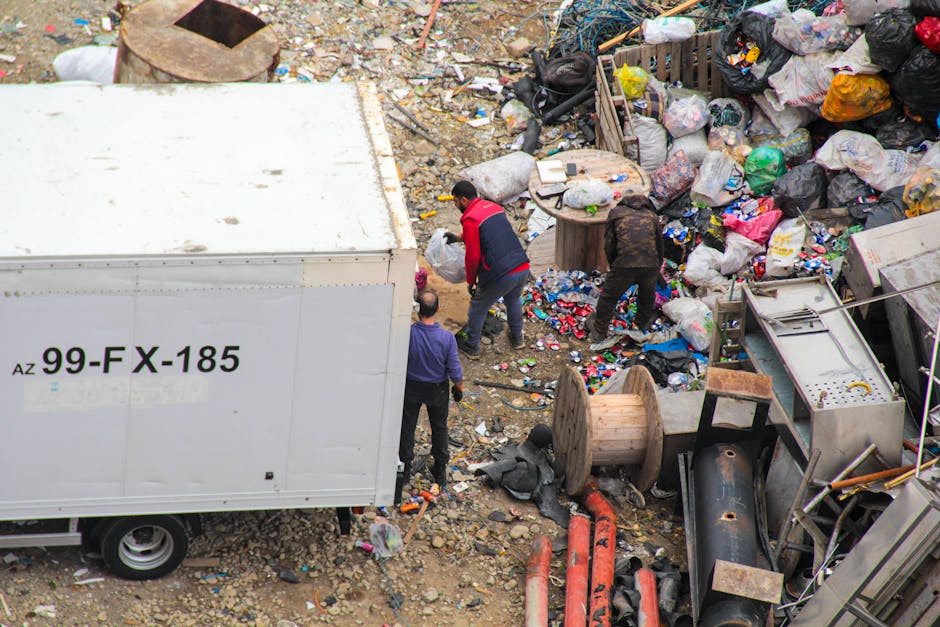
Brixton Market rubbish removal guide for stallholders

If you trade at Brixton Market, you already know the rhythm: early set-up, a busy few hours, then the quick collapse of tables, packaging, trimmings, broken-down boxes, food waste, and the odd awkward item that never quite fits anywhere. This Brixton Market rubbish removal guide for stallholders is here to make that part easier. Not glamorous, admittedly, but absolutely essential if you want a stall that looks professional, stays compliant, and does not turn into a small mountain of mixed waste by closing time.
Whether you sell produce, street food, clothing, homeware, or something a bit niche, rubbish piles up in different ways. The trick is not just getting rid of it, but doing it safely, legally, and without annoying neighbours, customers, or market management. In this guide, we will walk through how stallholders can handle waste more efficiently, what to watch out for, and when a dedicated business waste removal service starts to make real sense.
Quick reality check: the fastest way to lose time at the end of a market day is to leave waste sorting until the last ten minutes. You know how that goes. One broken crate becomes three, and suddenly the van door will not shut.
Why Brixton Market rubbish removal guide for stallholders Matters
Waste management is one of those behind-the-scenes jobs that affects almost everything else. If your rubbish is under control, the stall looks better, opening is smoother, customers have a nicer experience, and the day ends with less stress. If it is not under control, the whole pitch can feel cluttered, rushed, and slightly chaotic. Truth be told, people notice.
At a market like Brixton, space is usually tight. There may be narrow access, shared walkways, busy footfall, and limited time for loading or unloading. That means general rubbish removal is not just about tidiness. It is about keeping routes clear, reducing trip hazards, protecting stock, and avoiding those awkward last-minute scrambles where everyone is trying to move at once.
There is also a commercial side to this. A cleaner, calmer pitch tends to work better. Reusable packaging lasts longer when it is not thrown into a mixed pile. Food traders can keep storage areas more hygienic. Clothing stallholders can avoid cardboard and plastic blocking their display. Even a small change, like separating shrink wrap from cardboard, can save time and make collection easier.
Expert summary: the best rubbish removal system for a stall is usually the simplest one you can stick to every day. If staff cannot follow it quickly at closing time, it is too complicated.
It also helps to think about reputation. Market traders often work on repeat visits and word of mouth. A stall that is neat, organised, and not surrounded by overflowing bags sends a good signal. People like to buy from traders who seem on top of things. Fair or not, that is how it is.
How Brixton Market rubbish removal guide for stallholders Works
For stallholders, rubbish removal usually falls into a simple chain: sort, store, contain, collect, and dispose. The exact process depends on your goods, the size of your pitch, and whether you produce general waste, packaging, food waste, cardboard, or heavier items like damaged display materials.
In practical terms, the process often looks like this:
- Waste is created during trading - wrappers, trays, produce trimmings, packaging, offcuts, and damaged items build up through the day.
- Waste is separated where possible - cardboard, soft plastics, food waste, and reusable items should not all go in one bag if you can help it.
- Waste is kept in suitable containers - sacks, bins, crates, or sealed tubs keep everything tidy and reduce spills.
- Waste is moved off the pitch safely - usually at the agreed time and through the right route, not dragged awkwardly across customer areas.
- Waste is removed by your own team or a contractor - depending on your setup, that may be a trader, a shared market system, or a professional clearance team.
If you produce regular commercial waste, it is often more efficient to use a dedicated arrangement rather than relying on ad hoc disposal. Services such as waste removal and business waste removal can be helpful when the volume is steady, the waste mix is varied, or you need dependable collections after busy trading days.
Some stallholders also generate bulky items from time to time: old shelving, display units, cracked storage boxes, broken chairs, or surplus stock packaging after a refit. In those cases, a more flexible clearance option can be useful. The point is to match the service to the type of waste, not the other way round.
Key Benefits and Practical Advantages
A solid rubbish removal routine does more than keep the site clean. It gives you breathing room. And on a busy market day, that matters.
- Faster pack-down: less time spent deciding what goes where at the end of trade.
- Better presentation: clean surroundings make your stall look sharper and more inviting.
- Lower trip and spill risk: fewer loose bags, broken boxes, and slippery scraps underfoot.
- Improved hygiene: especially important for food traders or anyone handling perishables.
- Less storage pressure: waste does not have to sit around your home, van, or lock-up overnight.
- More predictable costs: regular handling is usually easier to budget for than emergency clearances.
- Less conflict with shared spaces: when everyone follows a cleaner system, there is less friction.
There is another, quieter benefit: it can make your own day feel less frantic. Anyone who has packed down in the rain, with hands full of tape and wet cardboard, knows that tiny bit of order can feel like a luxury. Not a big thing. Just enough to stop the day wobbling.
For traders who need to remove larger items, such as display furniture, damaged shelving, or redundant stock holders, a specialist clearance route is often better than trying to squeeze everything into mixed commercial bins. That is where services like furniture disposal or furniture clearance can be relevant, especially after a stall refresh or seasonal reset.
Who This Is For and When It Makes Sense
This guide is for stallholders who want a practical, realistic way to manage market waste without turning it into a daily headache. That includes:
- food and drink traders
- fruit and veg sellers
- clothing and accessories stalls
- homeware and gift sellers
- artisans with packaging-heavy stock
- seasonal traders with changing display setups
- anyone who occasionally needs bulky item removal
It makes sense to tighten up your waste plan when you notice one or more of these signs:
- your bin space fills up before the end of the day
- cardboard is stacking around the pitch
- staff are spending too long sorting rubbish after closing
- you are paying for repeated small disposals that could be bundled more efficiently
- your storage area is becoming a dumping ground
For some traders, the issue is not daily rubbish but occasional clear-outs. Maybe you have extra stock, old promotional materials, or damaged items after a refurb. In those cases, clearance support tied to broader domestic or commercial waste solutions can help. The same kind of practical thinking behind office clearance or even builders waste clearance can apply to a stall when you are dealing with a reset, fit-out, or repair. Different setting, same principle: remove the right stuff safely and quickly.
Step-by-Step Guidance
Here is a straightforward way to build a better rubbish removal routine for your stall. Keep it simple. Simple works.
1. Identify the waste you actually create
Start by listing the regular waste streams from a normal trading day. For example: cardboard, food waste, soft plastics, broken packaging, paper labels, wooden offcuts, or damaged stock. If you do this honestly for one busy week, patterns show up fast.
2. Separate waste at the source
Do not wait until everything is mixed together in one bag. Put cardboard in one place, food waste in another, and general rubbish in a sealed container. That one change can make end-of-day disposal much cleaner and quicker.
3. Choose containers that fit your stall
Big bins are not always better. Sometimes a few smaller, clearly labelled containers are easier to manage, especially in tight spaces. If the waste is light but bulky, such as packaging, compress it carefully before moving it on.
4. Set a closing routine
Create a repeatable pack-down sequence. For example: clear customer surfaces, bag loose waste, flatten cardboard, check under tables, seal food waste, then move the rubbish to the agreed collection point. Same order every day. Fewer mistakes that way.
5. Decide what needs professional removal
Not everything should go through the same route. Routine general waste may be fine in your normal arrangement, but bulky or awkward items are often easier to deal with through a specialist service. That could include mixed market waste, old display units, or surplus fixtures from a stall upgrade.
6. Schedule collections around trading times
The best clearance plan is one that does not interfere with customers or deliveries. A good provider should understand market timing, loading access, and the realities of a busy London site. If collections are too early, too late, or too vague, the day becomes harder than it needs to be.
7. Review what is working
After a few weeks, look at what still slows you down. Is cardboard the problem? Is packaging taking over? Do you need extra sacks, better labels, or a different collection frequency? A tiny tweak can save a lot of faff.
Expert Tips for Better Results
If you want rubbish removal to feel less like a chore and more like part of your trading system, a few habits make a real difference.
- Use colour coding where possible. It sounds basic, but different colours for different waste streams help staff move faster under pressure.
- Flatten cardboard immediately. Do it while you unpack stock, not three hours later when it has become a damp, awkward slab.
- Keep one dedicated "end of day" container. That gives you a catch-all for small items that would otherwise end up everywhere.
- Train every temporary helper. If someone is covering a shift, they should know the waste routine in under two minutes.
- Plan for rainy days. Wet packaging weighs more, tears more easily, and takes longer to move. London weather loves a test, doesn't it?
- Think about storage before you think about disposal. A tidy buffer zone for rubbish makes collection much easier.
One more thing: if you offer food or fresh produce, keep a close eye on spill control. A small leak can spread quickly across the base of a stall and create a smell that lingers. Nobody wants that at 3pm when trade is still lively.
For traders who carry mixed stock or swap layouts often, having a broader clearance plan can help. If you also keep stock or fixtures at home, services such as home clearance, house clearance, or flat clearance may be useful in different contexts when the clutter is not just on the stall.
Common Mistakes to Avoid
Most rubbish problems at market stalls are not dramatic. They are just small avoidable habits that pile up.
- Mixing all waste together: it saves ten seconds now and costs you twenty minutes later.
- Leaving waste until the end without sorting: by closing time, you are tired and rushed, which is exactly when mistakes happen.
- Overfilling bags: heavy or stretched sacks split at the worst moment. Usually near the entrance. Of course.
- Blocking walkways: even temporarily, this creates access problems and can frustrate staff and customers.
- Ignoring bulky waste: old fixtures, broken furniture, and unused displays do not disappear on their own.
- Using the wrong service for the job: a standard bin route is not always the best answer for large or mixed commercial waste.
There is also the temptation to "deal with it later" at the back of the van, in a lock-up, or at home. That usually means the rubbish just relocates and the problem becomes harder to manage. We have all done it once. Some of us more than once. No judgement.
Tools, Resources and Recommendations
You do not need a complicated setup to handle market waste well. A few practical tools go a long way.
- Heavy-duty sacks: for general waste and lighter packaging.
- Flattening board or cutter: helps reduce bulky cardboard volume.
- Labelled containers: useful for separating waste streams quickly.
- Gloves and cleaning cloths: basic kit for closing routines and spill control.
- Secure storage boxes: handy for reusable items or materials that should not be trashed.
- Spare tie wraps or tape: good for sealing bags and securing loose materials on busy days.
On the service side, it helps to know where specialist support fits. If your issue is regular commercial waste, business waste removal is often the most relevant route. If you are dealing with a one-off clear-out after trading changes, then waste removal may be the better conversation starter because it is broader and more flexible.
For stallholders also managing other spaces or stockrooms, there are other useful services on the site worth knowing about, such as garage clearance and loft clearance. They are not market-specific, naturally, but they are relevant if overflow stock or packaging ends up stored off-site. That happens more often than people admit.
Law, Compliance, Standards and Best Practice
Waste handling in a market setting is not something to treat casually. While the exact obligations can depend on the type of trade, the waste produced, and the arrangements in place, stallholders should generally follow accepted UK commercial waste practice and any rules set by the market operator.
In plain English, that usually means:
- you should keep waste under control and not let it create hazards
- you should separate recyclable materials where practical
- you should use approved disposal routes rather than leaving waste in unsuitable places
- you should store waste safely so it does not attract pests, cause smells, or block access
- you should make sure staff know the routine
If your waste includes food, liquids, glass, sharp materials, or contaminated packaging, extra care is needed. Gloves, secure containers, and spill-aware handling are all sensible. For anything heavy or awkward, do not improvise with poor lifting techniques; that is how small injuries happen. A trolley is cheaper than a week off work, to put it bluntly.
Best practice also means keeping records where appropriate, especially for regular commercial waste arrangements. Even without getting lost in paperwork, it is wise to know who is collecting what, when, and how. That kind of clarity saves arguments later.
For traders who want a provider with a more formal approach to site safety and reliability, it can be worth reviewing information such as health and safety policy, insurance and safety, and recycling and sustainability. Those pages are useful because they show how waste handling, risk control, and environmental habits are approached in practice.
Options and Comparison
Choosing the right rubbish removal method depends on how often you trade, how much waste you produce, and how mixed that waste is. Here is a simple comparison to help with the decision.
| Option | Best for | Pros | Limitations |
|---|---|---|---|
| Self-managed bin routine | Small, predictable waste volumes | Simple, low effort to set up, familiar for staff | Can become messy if waste increases or varies a lot |
| Regular commercial collection | Stalls with ongoing packaging or food waste | More reliable, easier to plan around trading days | Less flexible for bulky one-off items |
| One-off clearance service | Seasonal resets, bulky items, stock room clear-outs | Flexible, good for awkward loads | Not ideal as the only plan for regular daily waste |
| Mixed approach | Most active stalls | Practical balance of everyday handling and occasional extra support | Needs clear internal rules so people know which waste goes where |
For many Brixton stallholders, the mixed approach is the sweet spot. Daily waste is handled internally, and larger or unusual loads are passed to a specialist when needed. That way you are not paying for more service than you use, but you are also not stuck if the stall suddenly needs a clear-out.
Case Study or Real-World Example
Picture a food trader on a busy Saturday. By midday, there are produce trimmings, paper napkins, a few damaged boxes, and some greasy packaging from prep. Nothing dramatic, just constant accumulation. By 4pm, the stall still looks fine from the front, but the back corner is beginning to groan under the weight of it all.
Instead of letting everything pile into one bag, the trader uses a simple system: one container for food waste, one for cardboard, one for general rubbish, and a sealed tub for anything sharp or contaminated. Closing time becomes much easier. The team clears surfaces first, flattens boxes, seals waste, and moves each type to the correct collection point. Nobody is standing there staring at a heap of mixed mess wondering where to start.
Later in the month, the same trader replaces old shelving and display units. The waste is too bulky for normal handling, so it is dealt with separately through a clearance arrangement. That one decision avoids stuffing the van, avoids damage to the stock area, and keeps the stall ready for the next trading day.
Simple example, but a real one in spirit. Good waste handling is usually like that. Quiet. Efficient. Not especially exciting. But when it is wrong, you really feel it.
Practical Checklist
Use this checklist before and after trading days to keep your rubbish removal routine on track.
- Have you separated cardboard, food waste, and general rubbish?
- Are containers clearly labelled and easy for staff to use?
- Have you flattened bulky packaging as you go?
- Are bags sealed securely before moving them?
- Is anything sharp, heavy, or contaminated handled separately?
- Have you kept walkways and exits clear?
- Do you know what needs regular collection and what needs one-off clearance?
- Have staff been shown the closing routine?
- Is there a plan for wet-weather waste and spill clean-up?
- Have you reviewed whether your current disposal method still fits your stall?
If you can tick most of those off, you are already ahead of many traders. And if a few items are still messy, that is fine. Start with the worst one first. That usually gives you the biggest win.
Get a free quote today and see how much you can save.
Conclusion
A good Brixton Market rubbish removal routine is not about being perfect. It is about making the end of each trading day easier, cleaner, and safer. If you sort waste as you go, choose the right collection method, and treat bulky items separately, you will save time and avoid a lot of unnecessary hassle.
For stallholders, the best setup is usually the one that feels almost boring in its reliability. Waste goes where it should. Collections happen when expected. The pitch stays tidy. Customers notice, even if they never say it out loud. That quiet order gives your stall a better footing, and honestly, that is worth a lot in a market environment.
If you are refining your waste routine now, take it one change at a time. Small improvements add up, and the difference is often bigger than people expect.
Frequently Asked Questions
What is the best rubbish removal setup for Brixton Market stallholders?
The best setup is usually a simple mix of source separation, secure containers, and a reliable collection routine. For most stallholders, that means handling daily waste in-house and using a specialist service for bulky or unusual loads.
Do stallholders need a separate waste plan for food waste?
Usually, yes. Food waste should be managed carefully because it can create hygiene issues and smells if it is mixed with general rubbish. Sealed containers and regular removal make a big difference.
How often should market waste be removed?
That depends on trade volume. Busy food stalls may need daily attention, while other traders may only need scheduled collections or occasional clear-outs. The key is not letting waste sit too long.
Can I put all my waste into one bag to save time?
You can, but it is rarely the best idea. Mixed waste is harder to manage, can be messier, and often takes longer to dispose of properly. A little sorting at the start saves time later.
What should I do with bulky items like old shelving or display units?
Those are better handled separately. Bulky items often need a one-off clearance approach rather than a standard daily waste routine, especially if they are awkward to carry or store.
Is a professional waste removal service worth it for a small stall?
It can be, especially if your waste is regular, mixed, or bulky. If you are losing time at closing or storing rubbish off-site, a professional service may be more cost-effective than it first appears.
How can I reduce rubbish at my stall without changing stock?
Start with packaging habits. Flatten cardboard, reuse what you can, avoid unnecessary sacks, and set up clear sorting points. Small changes often reduce volume more than people expect.
What are the biggest waste mistakes market traders make?
The most common mistakes are mixing waste streams, leaving sorting until the end of the day, overfilling bags, and forgetting about bulky items. These problems are easy to miss when trade is busy.
How do I know if my current waste routine is good enough?
If waste is regularly cluttering the pitch, slowing pack-down, or creating storage problems, it probably needs refining. A good routine should make the day easier, not more awkward.
Can rubbish removal help with stall hygiene and presentation?
Yes. Cleaner waste handling improves hygiene, reduces odours, keeps walkways clear, and makes the stall look more professional. In a busy market, that presentation matters more than many traders realise.
What if I only need help once in a while?
That is common. Many stallholders only need occasional clearance for surplus stock, damaged fixtures, or seasonal resets. In those cases, one-off removal can be a sensible choice.
Where should I start if my stall waste feels out of control?
Start with the biggest pain point. If cardboard is the problem, tackle cardboard first. If food waste is the issue, fix containment and timing. One small improvement can calm the whole system down.